01
Safety
removing dead, damaged, or unstable limbs before they fail
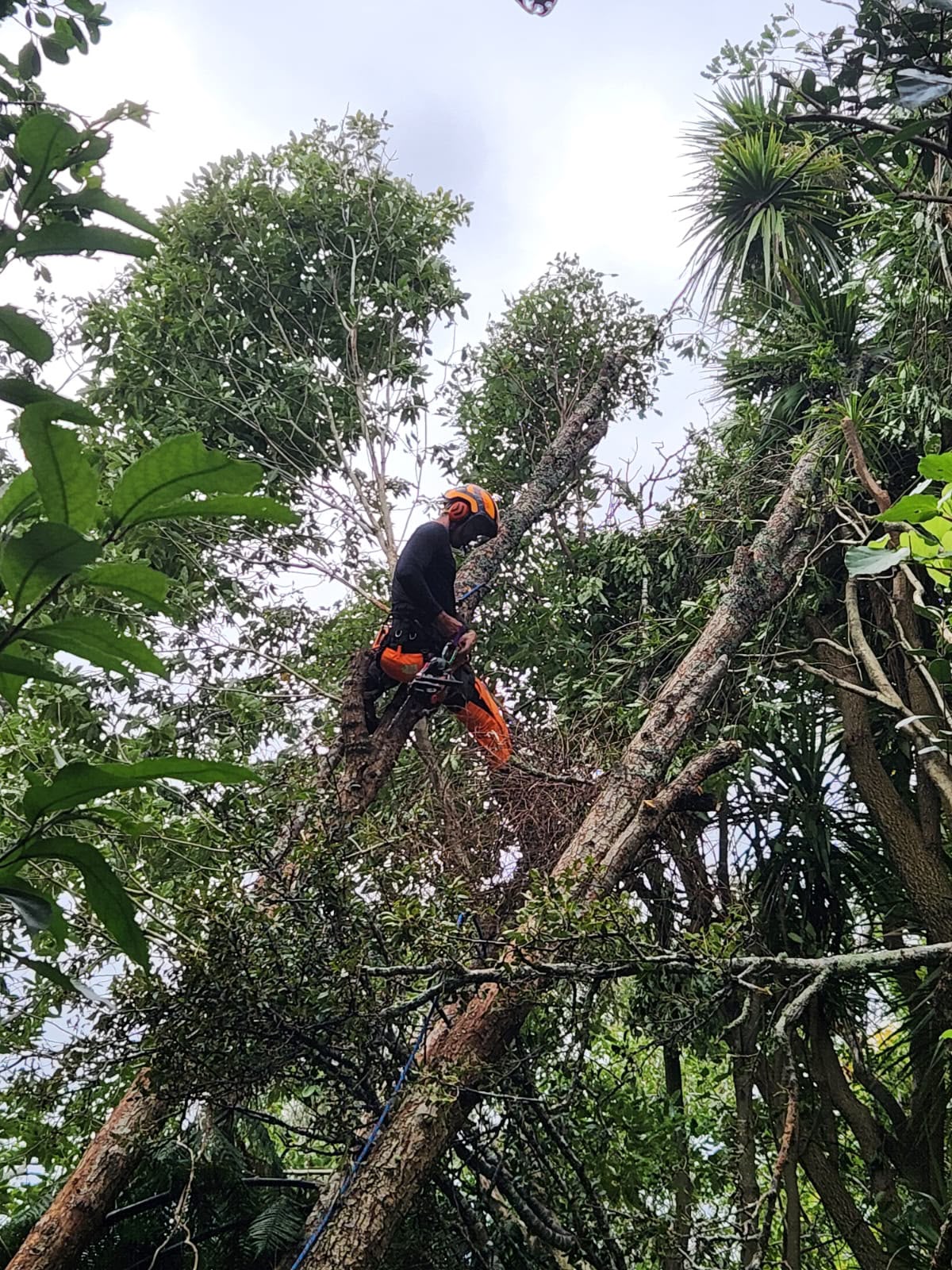
Prana Tree provides professional tree pruning and trimming for residential and commercial properties across the wider Wellington region. Good pruning improves a tree's health, structure and safety, bad pruning does lasting damage, and it's far more common than most people realise.
Our NZQA Level 4-qualified arborists prune to recognised arboricultural practice, explain what your tree actually needs, and leave the site clean. Every job starts with a free on-site assessment.
Pruning isn't just tidying. Done properly, it changes how a tree grows and how safe it is to live with.
removing dead, damaged, or unstable limbs before they fail
correcting weak forks, crossing branches, and poor form while a tree is still young enough to shape
moving growth back from roofs, gutters, driveways, fences, and away from nearby power lines
thinning or lifting a canopy that's shading a house, garden or view
taking out dead and diseased wood so the tree can put its energy into good growth
a well-thinned canopy carries less wind load than a dense, top-heavy one
If a tree's problem is bigger than pruning can fix, we'll say so, sometimes the honest answer is removal, and sometimes it's leaving the tree alone.
Most arborists list these terms. Very few explain what they actually achieve, which makes it hard to know what you're asking for.
Reduces a tree's overall height and spread while preserving its natural shape. Used when a tree has simply outgrown its space or when reducing wind loading on an exposed or top-heavy canopy. Done properly, cuts are made back to suitable lateral branches, not stubs.
Choose this when: the tree is too big for where it stands.
Removes the lowest branches to raise the canopy and create clearance underneath. Used for headroom over driveways, paths and lawns, or to clear a roofline or fence.
Choose this when: you need space underneath, not a smaller tree.
Selectively removes a portion of the inner growth to let more light and wind pass through the canopy, without changing the tree's overall size or outline.
Choose this when: the tree is the right size but too dense, casting heavy shade or catching too much wind.
Structural pruning of young trees to establish a strong framework early, correcting competing leaders and weak attachments before they become a problem. The cheapest, highest-value pruning there is, because it prevents faults you'd otherwise be managing for decades.
Choose this when: the tree is young and you want it to grow well.
Removal of dead, dying, and diseased branches. Improves safety and appearance without touching the live structure.
Choose this when: the tree is fundamentally healthy but carrying deadwood.
Staged work to bring an overgrown, neglected, or badly cut tree back toward a sound structure. Usually done over more than one visit, recovery can't be rushed without stressing the tree.
Choose this when: the tree has been left too long or previously cut badly.
Not sure which of these your tree needs? That's exactly what the on-site assessment is for, or, if you'd like advice before committing to any work, an arborist consultation.
Topping, cutting a tree's main stems back to stubs to reduce its height, is still widely offered, and it's poor arboriculture.
Cutting into stubs leaves large wounds that a tree can't seal properly, opening the way to decay. The tree responds with a rush of weak, densely packed regrowth attached only to the outer wood, which is more likely to fail in wind than the branches it replaced. Within a few years, the tree is usually taller, denser and less safe than before, and the same work has to be paid for again.
If a tree genuinely needs to be smaller, a properly executed crown reduction achieves that without damage. And if a tree is so oversized that only topping would fix it, that's usually a sign it's the wrong tree in the wrong place, and worth an honest conversation about the alternatives.
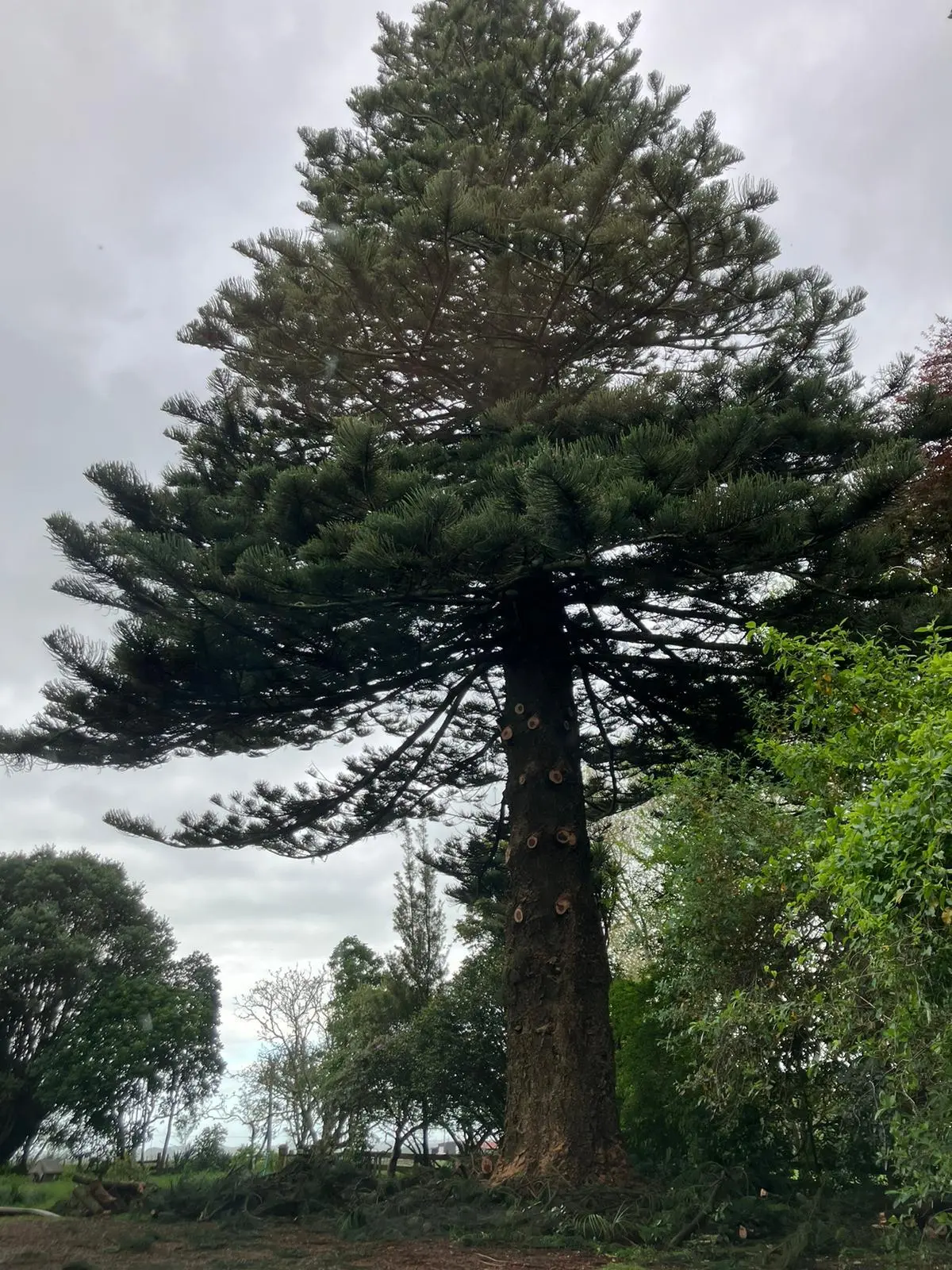
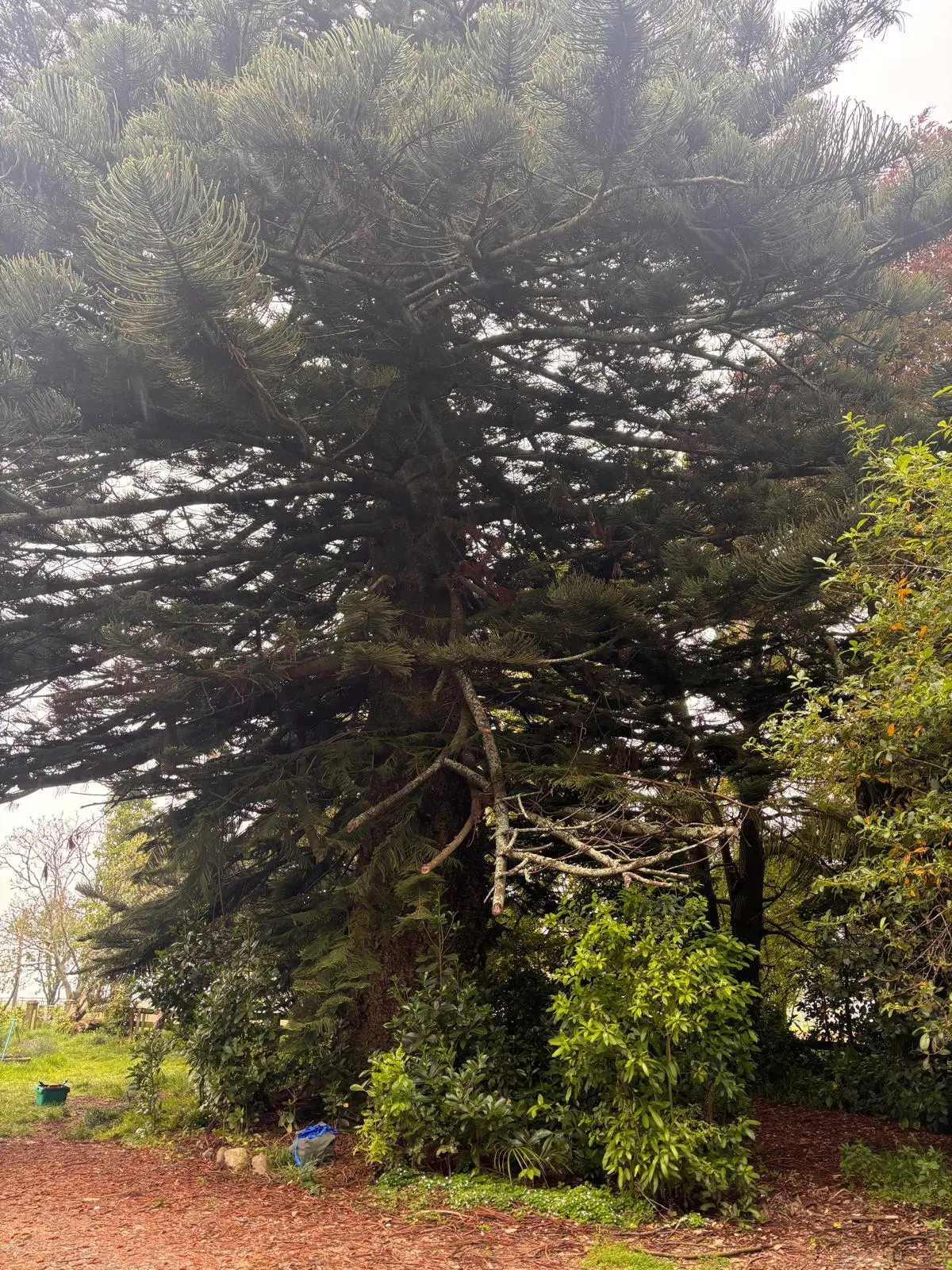
Norfolk pine crown lift and clean-up, pruned to good arboricultural practice.
Timing matters more than most people expect, and it varies by species. A few principles worth knowing:
We also factor in nesting birds. Disturbing the nests of native birds is an offence under the Wildlife Act, so heavy canopy work is best planned outside peak spring nesting, where possible, with canopies checked before work begins.
As a general rule, little and often beats hard and rarely. Regular light pruning keeps a tree in good shape; leaving it for a decade and then cutting hard is what causes most of the damage we're called in to fix.
Much of our pruning work happens in places where there's no room for error, over roofs and conservatories, along boundaries, above driveways and vehicles, and close to power lines.
In these situations, branches are climbed to, cut into manageable pieces, and lowered under control using rigging rather than being dropped. Ground protection is used where needed, and access is planned before anyone leaves the ground.
Trees growing close to power lines are a common reason people call us. Our work here is on the tree, pruning vegetation back to maintain clearance from nearby lines, not on the electrical network itself. It's also worth knowing that in New Zealand, keeping trees clear of lines is generally the tree owner's responsibility rather than the network's. There are legal minimum approach distances around live conductors that untrained people should never work inside, and work within those distances requires specific authorisation from the lines company. If your tree is close enough to a line that this applies, we'll tell you at the assessment and explain what's involved.
There's no single price for tree pruning, because a light trim on a small garden tree and a full crown reduction on a mature tree over a house are completely different jobs. What changes the cost:
whether the work can be done from the ground or requires climbing and rigging
deadwooding is quicker than a staged restoration or full crown reduction
how easily crew and equipment reach the tree, and how easily material comes out
pruning over a roof, glasshouse, or boundary takes longer than pruning over an open lawn
how much there is to chip and process
some trees are simply slower and more demanding to work in
Rather than quote a number that wouldn't fit your tree, we assess it in person, for free, and provide a clear written quotation based on the work required.
Book a Free On-Site AssessmentTell us about the tree by phone, WhatsApp, or the enquiry form.
We look at the tree properly, explain what it needs and what it doesn't, and talk through the options.
You receive a clear written quotation based on the work required, with no obligation to proceed.
Pruning is carried out by qualified arborists using appropriate climbing, rigging, and cutting techniques, with your property protected throughout.
Every job finishes with a complete site clean-up.
Prunings are typically chipped on site, with green material recycled into mulch and suitable wood processed into firewood. Surplus mulch and firewood are regularly offered free to the local community while stock lasts.
If you'd like mulch or firewood left with you, just ask before we start, it's easier to set aside than to bring back. More detail on our Green Waste Removal & Mulching page.
We prune for homeowners as well as property managers, landlords, body corporates, schools, and commercial and retail properties, from a single overgrown tree to scheduled maintenance across a whole site. For properties needing regular, planned work, see commercial tree maintenance.
Pruning looks simple from the ground. The difference between a cut that heals and a cut that starts a decade of decay is knowing where to make it, and that's training, not equipment.
Our arborists hold NZQA Level 4 Arboriculture qualifications, alongside chainsaw competency, climbing experience and relevant health and safety training. We work with professional climbing and rigging gear, chainsaws, pole saws, hand tools and chippers, and our work is fully insured, including public liability.
Prana Tree provides tree pruning and trimming across the wider Wellington region, including the Kapiti Coast, Wellington City, Porirua, the Hutt Valley, Levin and Ōtaki. See all our service areas, or get in touch and ask. On the coast, see our dedicated page on tree pruning on the Kapiti Coast.
Whether it's a single overgrown tree or a property full of them, start with a free on-site assessment. We'll tell you what the tree needs, what it doesn't, and what the work involves.
Or call 021 626 507 / message us on WhatsApp.