
01
Reseeding or new lawn
For reseeding or laying new lawn, the stump is ground far enough below the surface to cover with soil and grass.
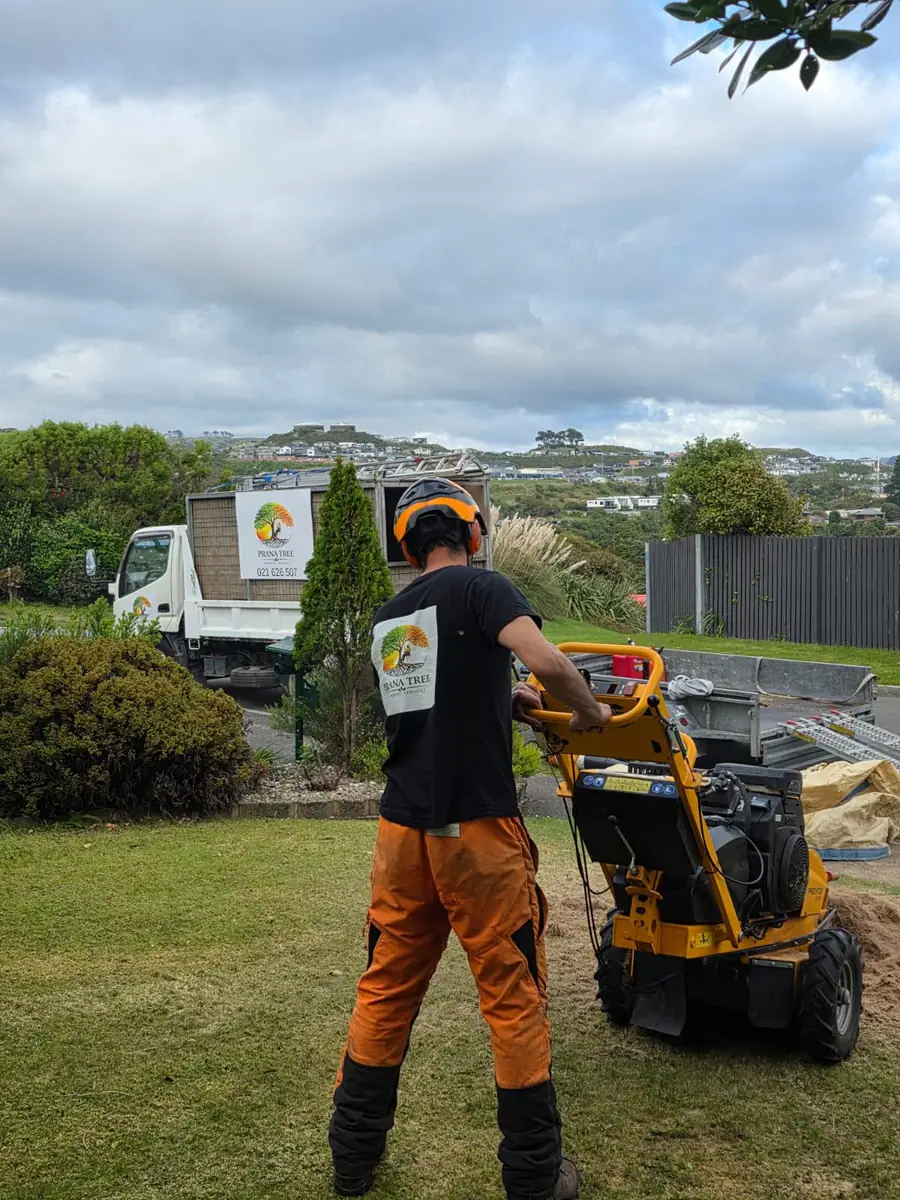
Left with a stump after a tree's come down? Prana Tree grinds tree stumps below ground level so you can reclaim the space, for lawn, garden, paving, or a fresh planting. Our NZQA Level 4-qualified arborists handle the grinding, clear up afterward, and leave the ground ready to move on with.
Every job starts with a free, no-obligation on-site quote.
Stump grinding uses a machine with a rotating cutting wheel to reduce a tree stump to wood chips, working it down below the surface of the ground. It's the most efficient way to deal with a stump left behind after a tree has been removed, far less disruptive than digging the whole thing out, which means far less mess and damage to the surrounding lawn and garden.
Grinding takes the stump down past ground level and reduces the roots closest to it. What you're left with is a hole filled with wood chips, ready to be levelled off, not a crater from an excavated root ball.
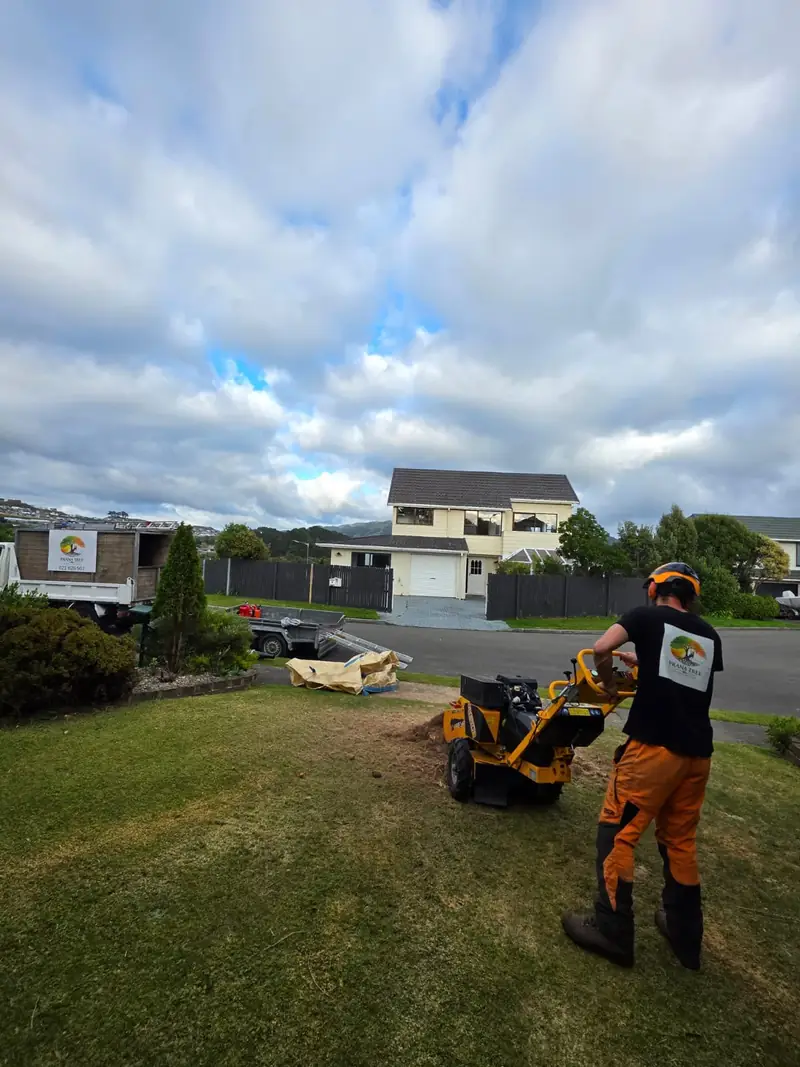
There are two ways to get rid of a stump: grind it down, or dig it out. They give very different results and very different amounts of disruption.
Grinding works the stump down in place with a cutting wheel. It's quicker, much tidier, and doesn't tear up the surrounding ground, which can make it a less disruptive option for a stump in a lawn or garden.
Digging out removes the stump and the root plate whole, which means excavating a large area, hauling away a heavy mass of timber and soil, and leaving a substantial hole to backfill. It's occasionally necessary, but it's a bigger, messier, more expensive job, and for most residential stumps it's more than the situation needs.
For many situations, grinding is a practical option. We'll tell you honestly if your situation is one of the exceptions.
This is the most common misunderstanding about stump grinding, so it's worth being straight about it.
Grinding removes the stump and the roots immediately around it, not the entire underground root system. The wider roots left in the ground break down naturally over time, and for most species, that's the end of it. A few, cabbage tree and willow in particular, can send up new shoots from root fragments left behind, which is a trait of those species rather than a sign the job wasn't done properly (more on that below). For the large majority of situations, laying new lawn, planting a garden, clearing the space, grinding is exactly what's needed.
If you're planning to pour concrete, build, or put in a driveway over the spot, tell us at the assessment. That can change how deep the grinding needs to go, and occasionally it's a reason to consider full excavation instead. Being clear about what you're doing with the space next is the single most useful thing you can tell us up front.
How far below the surface a stump needs to be ground depends on what you're planning to do with the ground afterward.
For reseeding or laying new lawn, the stump is ground far enough below the surface to cover with soil and grass.
For paving, concrete or building, it usually needs to go deeper, worth flagging at the quote so we plan for it.
For replanting a tree or shrub nearby, we'll talk through what the spot needs.
We work the depth to the job rather than to a fixed rule, so it's genuinely useful to know your plans for the space before we start.
Grinding produces a volume of wood chips, the ground-up stump itself. These are generally left on site, either as mulch or used to backfill and level the hole. If you'd rather have them taken away, removal is available as an additional part of the job, just let us know what you'd like when you get in touch, and we'll quote accordingly.
One thing worth knowing if you keep the chips as mulch: fresh wood chips temporarily tie up nitrogen in the soil directly beneath them as they break down, so they're better spread on top of garden beds than dug into soil where you're about to plant.
More on how we handle material on our Green Waste Removal & Mulching page.
You don't always have to remove a stump, but there are good reasons people do:
On that re-sprouting point: species like cabbage tree and willow can regrow vigorously from a stump or even root fragments left in the ground. Grinding the stump out is the reliable way to stop that cycle.
An old, decaying stump can provide a food source for wood-decay fungi and may occasionally harbour insects or wasp nests. In New Zealand, Armillaria (honey fungus) can spread from decaying stumps and roots to nearby healthy plants through root contact. Removing the stump can help remove this source of decaying wood.
This doesn't mean every stump is a problem, but if you're concerned about a diseased tree or have valuable plants nearby, stump grinding can be a practical part of clearing the area.
Left alone, a stump will eventually rot away, but "eventually" can mean many years, depending on the species and size. In the meantime, it stays a trip and mowing hazard, can re-sprout, can host the fungi and pests above, and slowly collapses into a soft, uneven patch of ground. For some people, that's fine to live with; for others, it's exactly the eyesore they want gone. Grinding simply makes the decision now rather than waiting a decade for nature to do it slowly.
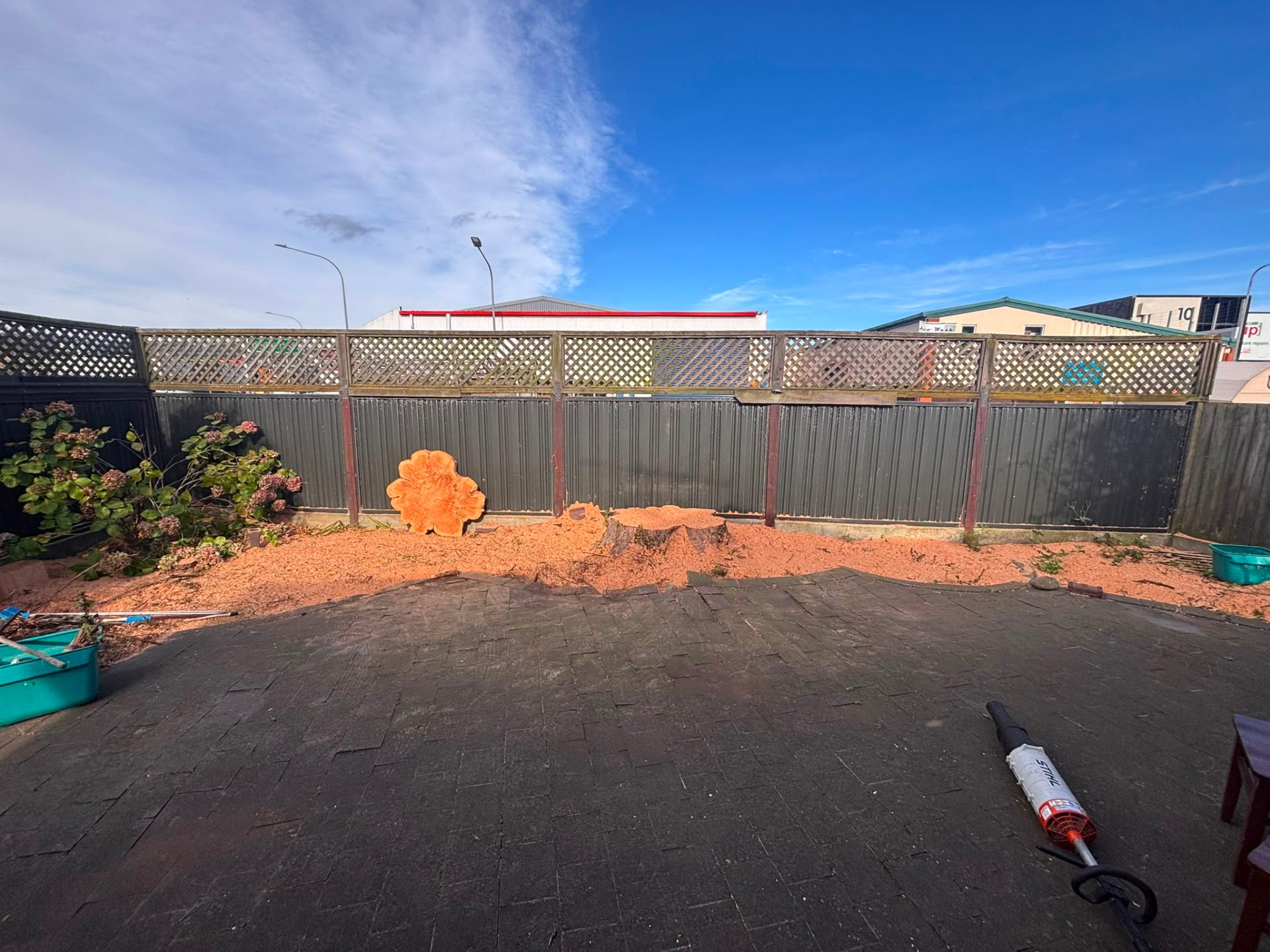
A stump grinder has to physically reach the stump, and that's the practical question on a lot of jobs, a tree in an open front lawn is a very different proposition from a stump in a fenced rear section down a narrow side path.
At the assessment, we look at access, gateway widths, ground conditions, slopes, and what has to be protected on the way in and around the stump, and plan the approach before any machine moves, so getting to the stump doesn't come at the cost of your lawn or paving.
It's also worth knowing what's underground before any grinding starts, water pipes, drainage, irrigation lines and buried cables can all sit near a stump, and grinding blind into them is a genuine safety and cost risk. If you know of anything buried near the stump, let us know when you get in touch.
If you've got more than one stump, it's worth dealing with them together. When you have several stumps, dealing with them in one visit can be more efficient than arranging separate visits. If you've a few to clear, mention all of them when you get in touch, and we'll quote the lot.
Fair question, and an honest answer: for a single small, easily accessed stump, a hired machine is a reasonable option for a capable person.
For anything bigger, harder to access, or where there's more than one, professional equipment does a better job, hire machines are generally smaller, don't grind as deep, and a stump grinder is genuinely dangerous equipment to be inexperienced with. Beyond the simplest job, having a qualified arborist do it usually works out better on cost, result, and safety once everything's accounted for.
Stump grinding is usually the second half of a tree removal job, the tree comes down, and the stump is what's left. If we've removed a tree for you, grinding the stump is a natural part of finishing the job properly, and you can read more about that side on our Tree Removal & Dismantling page.
We're also happy to grind stumps left behind by someone else, an old stump a previous owner left, or one from a tree another contractor took down. You don't need to have used us for the removal to have us grind the stump.
Tell us about the stump, or stumps, by phone, WhatsApp or the enquiry form. A photo and a rough idea of size and location help.
We look at the stump, the access, and what's around and below it, and talk through what you want the space for.
A clear written quotation based on the work required, with no obligation to proceed.
Qualified arborists grind the stump down and tidy the site afterward. If you've asked for the wood chips to be removed rather than left on site, that's taken care of as part of the job you've booked.
Stump grinding is done by arborists with NZQA Level 4 Arboriculture qualifications, using professional grinding equipment alongside the chippers and gear we use across our tree work. Our work is fully insured, including public liability, which matters on any job involving heavy machinery near your property, paving, and services.
You deal directly with Alejandro from the first enquiry through to the finished job.
Prana Tree provides stump grinding across the wider Wellington region, the Kāpiti Coast, Wellington City, Porirua, the Hutt Valley and Levin. See all our service areas, or get in touch and ask.
Whether it's one stump or a whole section to clear, start with a free on-site look. We'll tell you what's involved, what it'll take, and how best to leave the ground for whatever's next.
Or call 021 626 507 / message us on WhatsApp.