01
Routine trimming
keeping an established hedge sharp, square, and to its existing lines
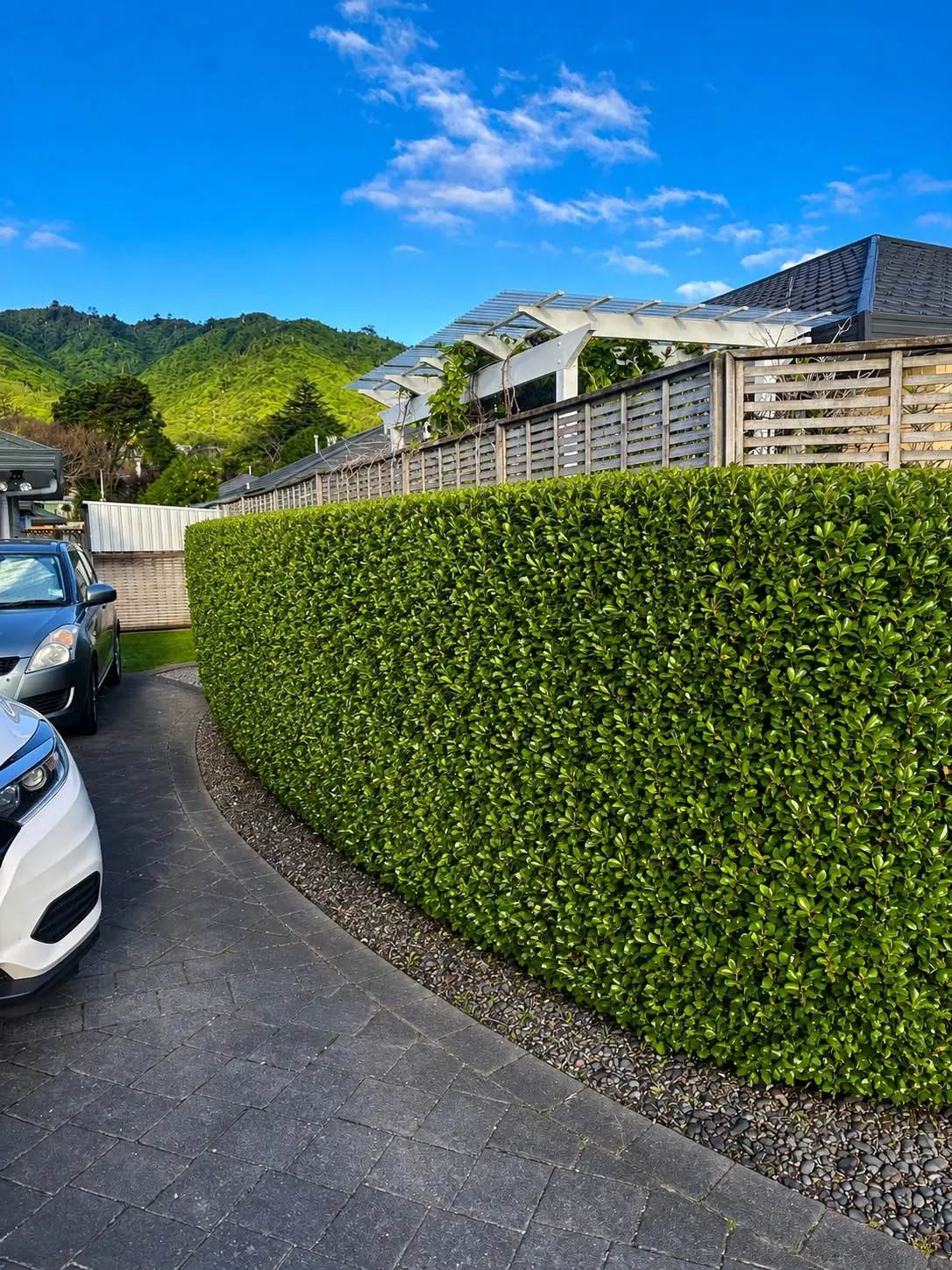
Prana Tree provides professional hedge trimming across the Kāpiti Coast, Wellington, Porirua, the Hutt Valley, Levin and surrounding areas. Whether your hedge has simply got away on you, grown too tall to reach safely, or needs regular tidying to hold its shape, our NZQA Level 4-qualified arborists handle it, and take every clipping away with them.
Every job starts with a free, no-obligation on-site quote.
Good hedge work is more than running a trimmer along the top. A hedge is a living boundary, it needs cutting to a clean line, kept to a sensible shape, and worked in a way that keeps it healthy and dense rather than bare and leggy.
We cover the full range:
keeping an established hedge sharp, square, and to its existing lines
bringing a hedge back down or in when it's outgrown its space
getting a neglected hedge back under control, often over more than one visit
restoring clean lines, taper, and a crisp finish to a hedge that's lost its form
keeping privacy and shelter hedges tidy along fence lines and frontages
Whether you call it hedge trimming, hedge cutting, or hedge maintenance, it's the same thing to us: the right cuts, a clean finish, and a tidy site afterward.
Miss a season or two, and a hedge changes character. It goes woody, widens beyond its footprint, and starts blocking a path, a window, or a driveway, and by then it's well beyond what a domestic trimmer can handle.
The good news is that most overgrown hedges can be recovered. How we approach it depends on the species and how far it's gone:
We'll tell you honestly what applies to your hedge before we start, including a realistic idea of how long recovery will take. What we won't do is cut a hedge so hard it can't come back (see the section on hard cutbacks below).
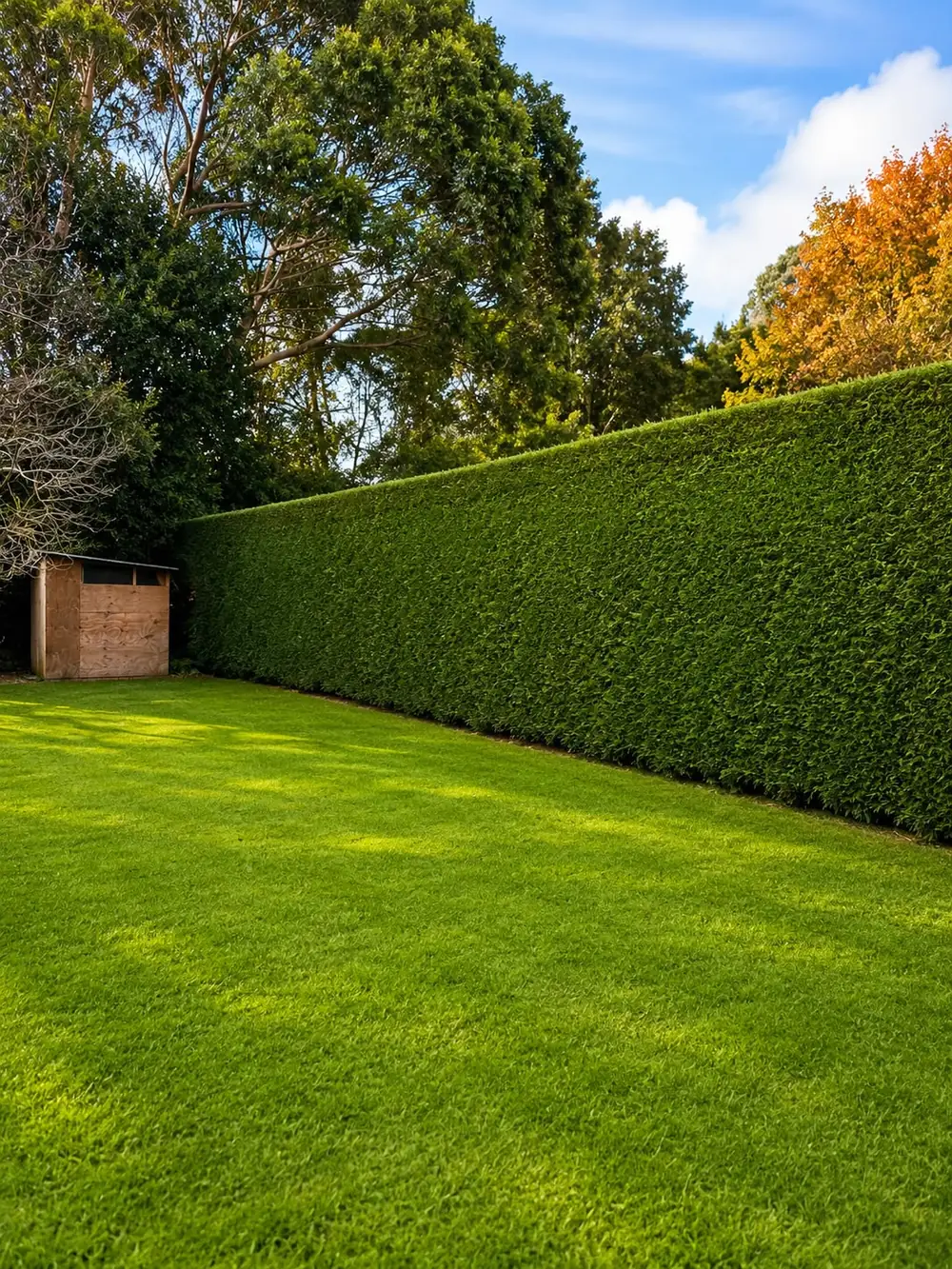
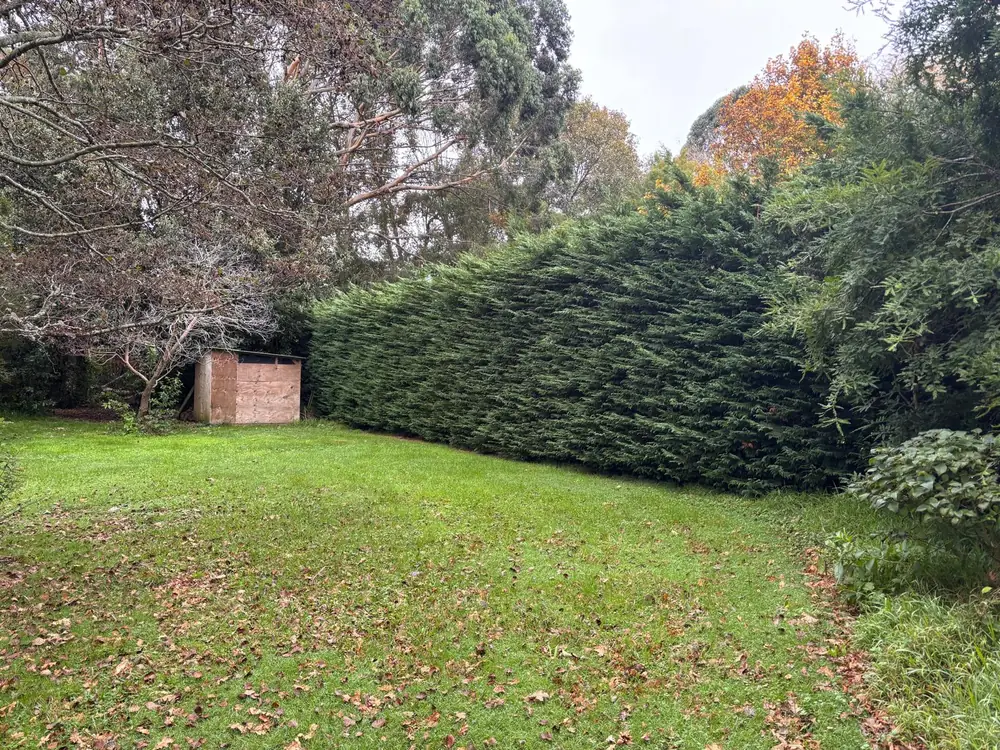
Overgrown hedge trimming before and after
Height is the single most common reason people stop trimming a hedge themselves, and the most common reason hedge work goes wrong. Once a hedge is above comfortable reach, working from a ladder can introduce unnecessary fall risk.
Once a hedge is above comfortable reach, our arborists work it using professional climbing and rigging equipment and long-reach tools rather than balancing on a ladder. That means tall boundary hedges, long shelterbelts and full-height runs get cut safely, to an even line top to bottom, without anyone risking a fall or leaving the top untidy because it couldn't be reached.
This is genuinely where a qualified arborist earns their place over a general mowing or gardening contractor.
Reducing a hedge is a different job from trimming one. Instead of following the existing lines, we're bringing the whole hedge down in height or back in width to reclaim space, headroom over a path, light into a room, a lost view, or simply a hedge that's become too big for its spot.
Done properly, a reduction keeps the hedge looking deliberate rather than butchered, with the top and sides brought into proportion and a shape the hedge can grow back into cleanly. How much can safely come off in one go depends on the species, which brings us to the most important thing to understand before any big cut.
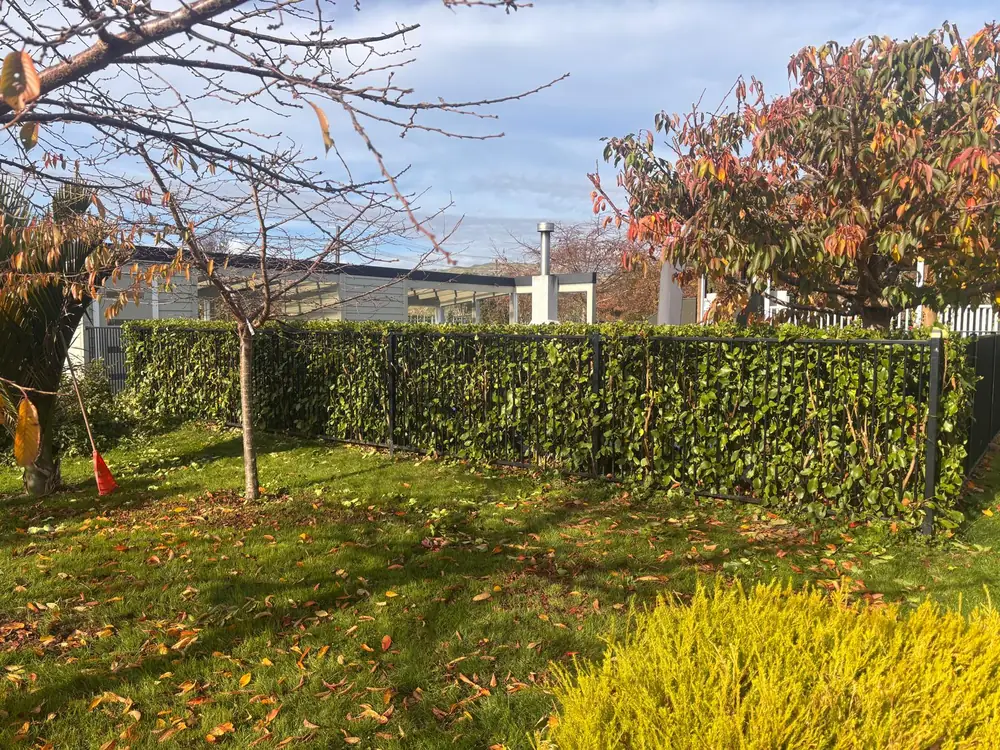
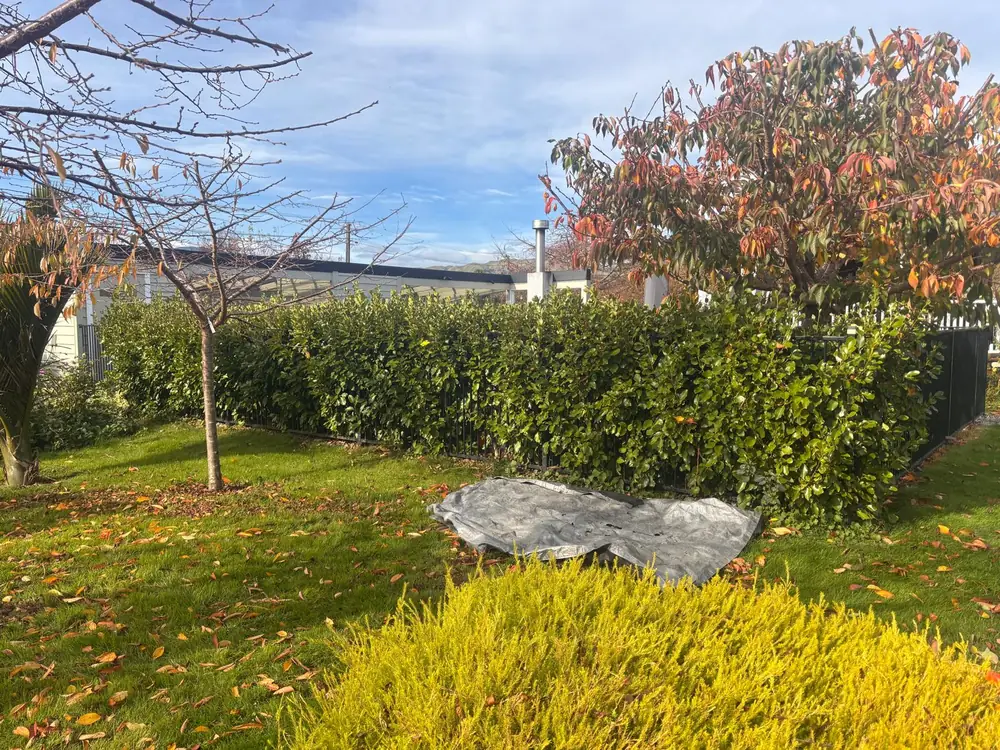
Hedge trimmed to a clean line
This is worth understanding before you agree to a big reduction, because it decides what's actually possible.
Broadleaf hedges, griselinia, pittosporum, photinia, camellia, corokia, laurel, will generally re-shoot from bare wood. Cut one back hard, and while it looks sparse for a while, it will usually thicken up again over a season or two.
Most conifer hedges, leylandii, macrocarpa, thuja and similar, will not regrow from brown, needle-free wood. They only carry live growth in the outer green shell, so a cut past that green into bare wood leaves a permanent bare patch.
That distinction decides how a hedge can be reduced. It's why we check the species and the depth of live growth before quoting a reduction, and why, on an old conifer that's outgrown its space, the honest answer is sometimes that reduction has limits, and it's worth talking through the alternatives.
Timing affects how a hedge looks and how well it recovers. A few general principles:
If you're not sure when your particular hedge should be cut, we're happy to advise in the quote.
There's no single price for hedge trimming, because a low buxus border and a four-metre boundary run are completely different jobs. What changes the cost:
whether the hedge can be worked from the ground or needs climbing and long-reach equipment
how much hedge there is to cut
a light maintenance trim is quicker than a hard reduction or an overgrown recovery
how easily we can get to the hedge and move clippings out, especially down narrow side access or over garden beds
some hedges are simply slower and more demanding to cut cleanly
hedges produce a surprising amount of green waste for their size, and removing it is part of the job
Rather than quote a figure that wouldn't fit your hedge, we look at it in person, for free, and give you a clear written quotation based on the work required.
Book a Free On-Site QuoteHedges sit on boundaries, which is where most hedge questions come from. A few general points on the New Zealand position, this is general information, not legal advice, and for any dispute, it's worth talking to your neighbour first and getting proper advice:
At the practical end of all this, we're happy to trim a boundary hedge cleanly to the line. We'd just always suggest sorting out an agreement with the neighbour first, where the hedge isn't yours.
Boundary hedges, often macrocarpa, leylandii or an old conifer shelterbelt, have a habit of growing up into overhead lines.
A few things worth knowing: keeping vegetation clear of power lines is generally the tree or hedge owner's responsibility, and under the regulations, only qualified people may cut within four metres of a line. Our work here is on the hedge, cutting vegetation back to maintain clearance, not on the electrical network. Where a hedge has grown close enough to the lines that this applies, the right first step is to contact your lines company (Electra on the Kāpiti Coast and in Horowhenua; Wellington Electricity in Wellington, Porirua and the Hutt Valley), and we'll explain that at the quote.
Hedge trimming generates a lot of clippings for the size of the job, and dealing with them is part of what you're paying for. Clippings are chipped and taken away, leaving the site tidy, or, if you'd like the mulch kept on site, just ask before we start. Suitable material is recycled into mulch, and surplus mulch and firewood are regularly offered free to the local community while stock lasts. More on our Green Waste Removal & Mulching page.
We maintain hedges for property managers, landlords, body corporates, schools, and commercial and retail sites, long boundary runs, site perimeters and car park screening included. We're set up to handle scheduled work, keep sites safe while we're on them, and invoice in a way that suits managing agents. For broader ongoing work across a site, see commercial tree maintenance.
A hedge kept on top of is far less work, and far less expense, than one left until it's a problem. Once we've trimmed yours, we're happy to come back whenever it needs a touch-up, at whatever rough interval suits the hedge and you. No contracts or lock-ins, just a standing offer to keep it looking sharp so you don't have to think about it.
NZQA Level 4 Arboriculture qualifications, not a mowing round with a hedge trimmer on the trailer.
Some of our team bring more than 15 years of hands-on arboricultural experience, including plenty of tall and difficult hedge work.
If your hedge needs less than you think, or a hard cut would do it harm, we'll tell you. Sometimes we'll even tell you the job doesn't need an arborist at all.
Fully insured, including public liability.
Clippings chipped and removed, site left tidy, every job.
Highly rated by local customers, with strong Google reviews and repeat commercial clients across the region.
Honestly, not always. A small buxus border or a low garden hedge is fine for a keen homeowner or a gardener with a domestic trimmer.
It's worth calling a qualified arborist when the hedge is tall (anything you'd need a ladder for), a conifer that can be ruined by a bad cut, growing near power lines or a structure, or needs a proper reduction rather than a light trim. If you're not sure which camp your hedge falls into, ask us, we'll give you a straight answer.
Prana Tree provides hedge trimming across the wider Wellington region, the Kāpiti Coast (including Paraparaumu, Waikanae, Raumati, Ōtaki and Paekākāriki), Wellington City, Porirua, the Hutt Valley and Levin. See all our service areas, or get in touch and ask.
Whether it's one overgrown hedge or a whole boundary that needs regular attention, start with a free on-site look. We'll tell you what your hedge needs, what it doesn't, and what the work involves.
Or call 021 626 507 / message us on WhatsApp.