Tree Pruning & Trimming on the Kapiti Coast
Prana Tree provides tree pruning and trimming across the Kapiti Coast, from Paraparaumu and Waikanae through to Raumati, Ōtaki and Paekākāriki. Whether it's a wind-battered tree on an exposed coastal section, a canopy shading the house, or branches creeping toward the roofline, our NZQA Level 4-qualified arborists prune it properly and leave the site clean.
Every job starts with a free, no-obligation on-site quote, and honest advice about what your tree actually needs.
Coverage
Where We Prune on the Kapiti Coast
We work throughout the Kapiti Coast, including:
- Paraparaumu and Paraparaumu Beach
- Waikanae and Waikanae Beach
- Raumati Beach and Raumati South
- Ōtaki
- Paekākāriki
- Otaihanga, Peka Peka, Te Horo and Pukerua Bay
Not on the list? We cover the wider region as well, from Levin in the north down toward Porirua. Get in touch, and we'll let you know.
Coastal conditions
What Kapiti Trees Deal With
Trees on the Kapiti Coast grow in conditions that shape how they need to be pruned.
Coastal environments are generally harder on trees than sheltered inland sites. Wind exposure and salt-laden air affect how a tree develops, and on exposed sections, it's common to see one-sided or wind-shaped canopies, dieback on the seaward face, and limbs that have been worked loose over years of onshore weather. Pines and macrocarpa are widely planted across the district, often as shelterbelts and boundary rows, alongside natives like pōhutukawa, and the older shelter plantings in particular tend to need attention as they mature past the job they were planted for.
The other thing that varies here is the property itself. A compact residential section in Paraparaumu Beach, a coastal property catching the full westerly, and a lifestyle block out toward Te Horo or Peka Peka are three different pruning jobs, even on the same species. That's why we assess on site rather than quote from a description.
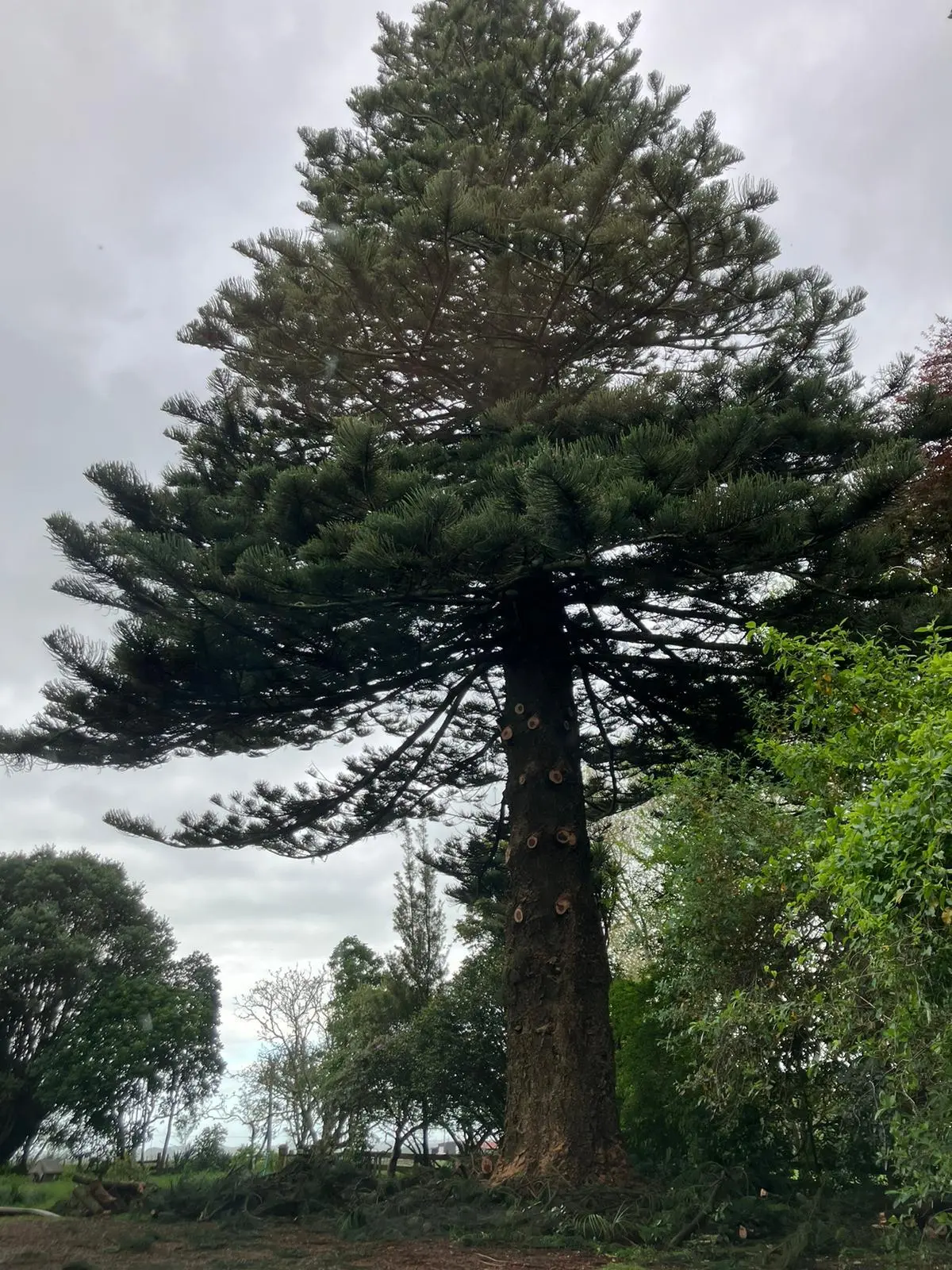
Before
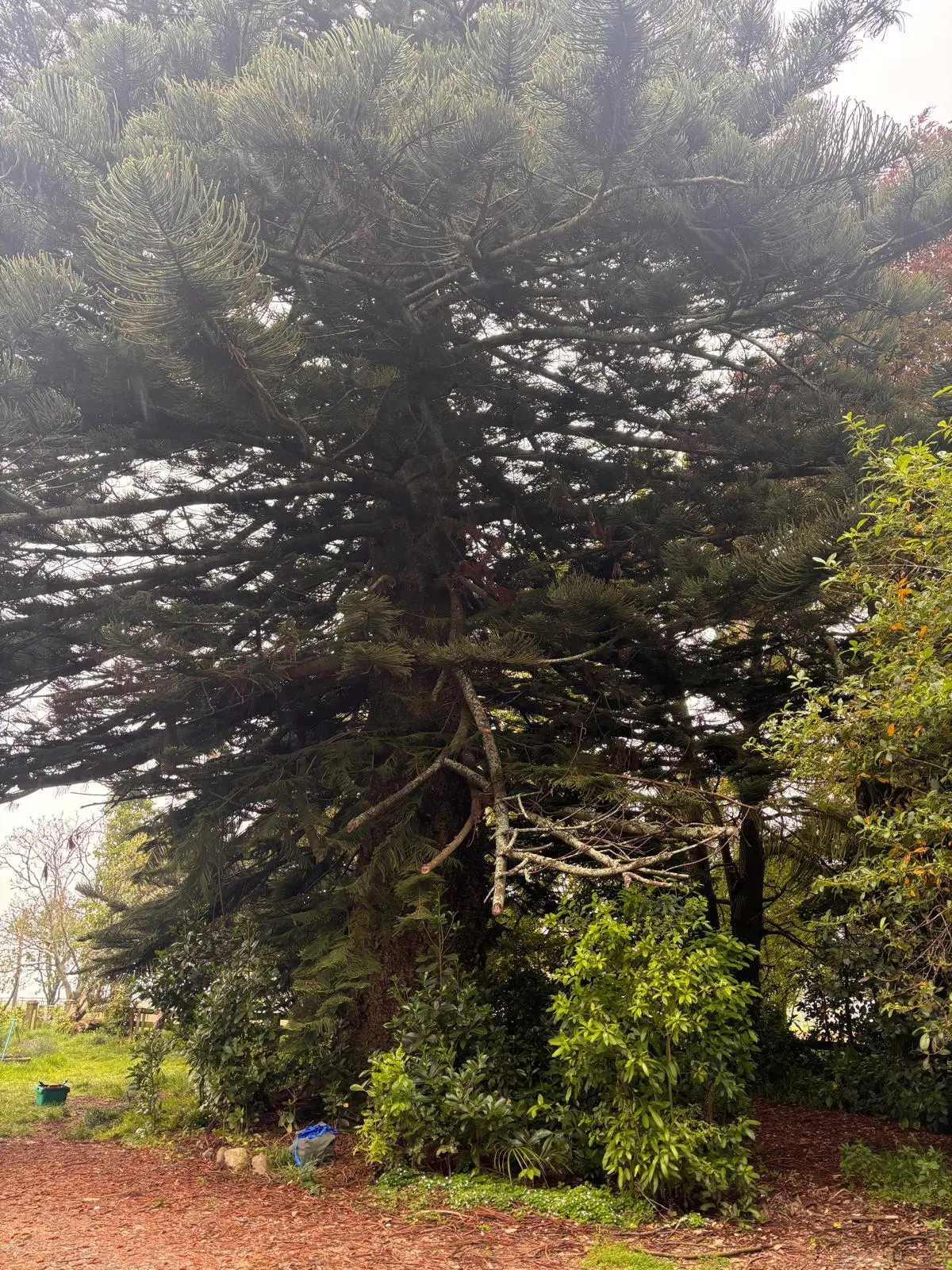
After
Norfolk pine crown lift and clean-up on a Kapiti Coast property.
Council
Do You Need Council Permission to Prune a Tree in Kapiti?
This is the question we get asked most, and the answer is more reassuring than most people expect.
Since 2015, Kāpiti Coast District Council has not applied blanket protection to urban trees. Only the most significant indigenous trees are scheduled as protected, along with trees in identified ecological sites. And crucially, trimming a protected tree is generally a permitted activity, the council's rules treat pruning differently from removal, provided the work is carried out to arboricultural best practice. It's the removal that's the restricted activity requiring resource consent.
In practice, that means most Kapiti property owners can have their trees pruned without any council process at all.
Two things worth knowing:
This is general guidance, not planning advice, rules do change, and the council is the authority on your specific tree.
What we do
The Pruning Work We Do Here
Crown reduction, crown lifting, crown thinning, formative pruning, deadwooding and restoration pruning on overgrown trees, the full range, on residential and commercial properties alike.
The most common Kapiti requests we see:
- Wind-damaged and storm-broken limbs after a southerly or a bad westerly
- Canopies reduced or thinned on exposed sections to cut wind-loading
- Overgrown shelterbelts and boundary trees that have outgrown their purpose
- Branches over roofs, gutters, driveways, and fences
- Trees shading a house, deck, or garden that need light to get through
- Trees growing toward nearby power lines
- Long-neglected trees need staged restoration rather than one hard cut
If you're not sure which type of pruning your tree needs, our general Tree Pruning & Trimming page explains what each one achieves and when you'd choose it.
Method
Pruning Near Homes, Boundaries and Powerlines
Kapiti sections are often tighter than they look, and a lot of the pruning here happens over something that matters, a roof, a glasshouse, a fence line, a neighbour's garden, or a driveway with a car on it.
In those situations, branches are climbed to, cut into manageable sections, and lowered under control with rigging rather than dropped. Ground protection goes down where it's needed, and access is worked out before anyone leaves the ground.
We also prune trees growing close to power lines. That work is on the tree, maintaining clearance from nearby lines, not on the electrical network itself. In New Zealand, keeping trees clear of lines is generally the tree owner's responsibility rather than the network's, and there are minimum approach distances around live conductors that require specific authorisation from the lines company to work inside. If your tree is close enough that this applies, we'll tell you at the assessment and explain what's involved.
QuotingBook a Free On-Site Quote
What Tree Pruning Costs on the Kapiti Coast
There's no single price, because a light trim on a small garden tree and a staged reduction on a mature pine over a house are completely different jobs. Size and height, the type of pruning, access, what sits underneath the tree, and how much material comes out all change the work involved.
Rather than quote a figure that wouldn't fit your tree, we assess it in person, for free, and give you a clear written quotation based on the work required, with no obligation to proceed.
Why Prana Tree
Why Kapiti Property Owners Choose Prana Tree
01
Honest advice
If your tree needs less work than you expected, or none, we'll say so. We'd rather prune correctly than sell you a bigger job.
02
We don't top trees.
Topping is still offered around the district, and it does long-term damage. Where a tree genuinely needs to be smaller, a proper crown reduction achieves it without wrecking the tree.
03
Qualified and experienced
NZQA Level 4-qualified arborists, with some of our team bringing over 15 years of experience in technical climbing and rigging work.
04
Insured
Our work is fully insured, including public liability.
05
Full clean-up
Prunings are chipped, green material recycled into mulch, and suitable wood processed into firewood, with surplus regularly offered free to the local community while stock lasts.
06
Direct contact
You deal directly with Alejandro from first enquiry through to completion.
Process
How It Works
01
1. Get in touch
Tell us about the tree by phone, WhatsApp, or the enquiry form.
02
2. Free on-site assessment
We come to your Kapiti property, look at the tree properly, and talk through what it needs and what it doesn't.
03
3. Clear written quotation
A clear written quotation based on the work required, with no obligation to proceed.
04
4. The work and a full clean-up
Pruning is carried out by qualified arborists, your property is protected throughout, and the site is left tidy.
Clients
Residential and Commercial Pruning
We prune for Kapiti homeowners as well as property managers, landlords, body corporates, schools, and commercial and retail properties, from a single overgrown tree to scheduled work across a whole site. For properties needing regular planned maintenance, see commercial tree maintenance.
FAQ
Frequently Asked Questions
Yes, Paraparaumu, Waikanae, Raumati, Ōtaki, Paekākāriki, Otaihanga, Peka Peka, Te Horo and Pukerua Bay, plus the surrounding areas and the wider Wellington region.
Usually not. Kāpiti Coast District Council treats trimming differently from removal, trimming is generally permitted, including on protected trees, where it's done to arboricultural best practice. Removal is the activity that's restricted. If your tree is a scheduled significant indigenous tree, check with the council's duty planner first.
It depends on the size of the tree, the type of pruning, and the access, which is why we assess in person rather than publish a figure. The assessment and quotation are free, with no obligation.
Yes, and it's a lot of what we do here. Wind-shaped and salt-affected trees often need thinning to reduce wind-loading or reduction work to bring a top-heavy canopy back under control.
Yes, we prune trees to maintain clearance from nearby lines. Work within the minimum approach distances of live conductors requires authorisation from the lines company, and we'll explain where your tree sits at the assessment.
Yes. Older shelter plantings are common across the district and often need reduction or restoration work once they've outgrown what they were planted for.
Material is chipped and taken away, with green material recycled into mulch and suitable wood processed into firewood. If you'd like mulch or firewood kept on site, just ask before we start.
Free assessment
Request a Free On-Site Quote
Whether it's one overgrown tree or a property full of them, start with a free on-site assessment. We'll tell you honestly what the tree needs, what it doesn't, and what the work involves.
Or call 021 626 507 / message us on WhatsApp.
- Qualified arborists
- Fully insured (public liability)
- Free on-site quote
- Complete clean-up
Kapiti Coast tree pruning enquiry
We'll be in touch within 24 hours.